Showing posts with label social media. Show all posts
Showing posts with label social media. Show all posts
Tuesday, 25 November 2014
Iceland Foods: Jungle Bells
Discount food retailer Iceland has continued to use celebrity Peter Andre to front its TV advertising. The Christmas 2014 campaign features a range of desserts and is notable for having background music recorded by Andre himself. He has recorded a whole album which is available exclusively in Iceland - and via iTunes. There does not appear to be any charity tie-in with this album - something that Asda and John Lewis have set up with their Christmas music.
The ad was premiered on November 5, but to date its 16,000 viewings must be disappointing for a high profile campaign. Andre's White Christmas album has yet to appear in the UK charts. The campaign has perhaps been overshadowed by controversy on November 17 after the singer was reported to have poked fun at his sponsor on another TV show. In what was described as an audience backlash, there were calls on social media for Andre to be sacked by Iceland.
Iceland actually is relatively insignificant on Twitter with just 18,000 followers (compared to Sainsbury's 300,000) and we have been hard put to find the resignation calls. Iceland's social media pages are dedicated largely to their promotion of the reality TV show I'm a Celebrity. In addition to the visuals on Facebook and Twitter, the company produces Celebrity themed merchandise in store, including a board game. Almost the entire social media commentary is based around the TV show, although Iceland does incentivize its fans with prizes from time to time.
Imaginatively, it has themed displays instore where shoppers can photograph themselves in a Celebrity photomontage and share the resulting images online. On Twitter the most commonly used hashtag is #ImACeleb. For the moment, at least, Christmas has yet to arrive at Iceland. No wonder the TV commercial is doing so badly on YouTube.
Peter Andre works reasonably hard for his sponsors. On Twitter his 3.2 million fans dwarf Iceland's small following, and he is regularly linking his supporters to the supermarket's social media campaigns.
In summary: a lot of things waiting to happen. Including Christmas. In the meantime, business as usual.

Primark, TK Maxx and Matalan
TK Maxx, Primark and Matalan are all large retailers, competing for the same sorts of business as Marks & Spencer, Debenhams, John Lewis, Littlewoods and the House of Fraser. For all of these stores, the Christmas season is the busiest time of year, so how have they set out their stalls on television this year?
The TK Maxx advertisement was released on November 5. It has a punchy backing track from Solomon Burke, 'Everybody needs somebody to love'. However, there is no download tie-in to iTunes. The ad has been seen just short of 12,000 times on YouTube. There are 6 companion pieces showing the 'ordinary' couples who feature in the original ad. Viewings for these are numbered in the hundreds.
TK Maxx has a fairly small Twitter following of 25,000, who are treated to offers and promotions, with a few competitions thrown in. The Twitter feed promotes the videos extensively. However there is no recognisable TK Maxx hashtag being used. It is very much the same story on Facebook, where TKM has nearly 430,000 fans.
Primark's TV advertisement, launched on 20 October, has had a mere 5,600 viewings. We know absolutely nothing about this ad. However, the company has more Facebook fans than any other UK retailer (nearly 3.5 million) and is consistently growing its business. Primark uses Facebook extensively and embeds movies on the FB pages. Most postings are heavily 'liked' and commented on, and Primark seem not to have the problem with complaining customers using Facebook to sound off about poor service or faulty products.
Primark's Twitter pages have nowhere near the same audience, although they repeat much of the same material. Their use of hashtags is generic: for example #Christmas, #Primark, #menswear.
Finally, Matalan's Christmas to Remember may be the one they want to forget, with just 900 views since its launch on November 13. The explanation for these dismal figures may be the earlier release launch of another Matalan commercial, tied in with a fund-raising campaign based around Pixie Lott's music. This is downloadable from iTunes, as happens with music from John Lewis's TV campaign and Asda's. The charity advert, Alphabet Scarves, has a much more impressive 115,000 viewings.
Unsurprisingly, the charitable campaign features on Matalan's social media platforms. The company has 183,000 'likes' on Facebook, a comparatively small figure for a national retailer. Similarly, Matalan have kept the Alphabet Scarves campaign prominent on Twitter. Here the hashtags #AlphabetScarf and #scarfie are working well for Matalan.
Do-it-yourself @Christmas
The two major home improvement (DIY) retailers have positioned themselves to get a slice of the festive spending. B&Q launched their Christmas advertisement on 7 November, and Homebase followed on 19 November.
B&Q's movie seems there to show that the firm not only sells trees, lights and decorations, but a range of toys also. The ad itself is pretty unremarkable: what is more interesting is their campaign to get digital engagement via something called The Big Switch On. The company is encouraging customers to decorate their trees and to film the moment when the lights are lit.
These bits of film are then uploaded to Twitter, Facebook or Instagram, using the hashtag #ChrismasUnleashed. B&Q have a long running campaign using the term unleashed.
B&Q then add the location of these uploads to a UK map. This mirrors the Waitrose campaign to get customers singing; in both cases the companies promise that the best results will appear in later TV advertising.
At the time of writing (25 November) this imaginative idea hasn't exactly gone viral. The map shows a few dots around London and one in the Bournemouth area. But it is early days and the plan seems to be to make December 6 be the big switch on day. B&Q's 46,000 Twitter followers seem muted. In fact the #ChrismasUnleashed hashtag seems to be being used by other retailers and as a generic term by the Twitterati. Both here and on Facebook (B&Q has over 125,000 likes) the moderators are dilligently promoting the Big Switch On: however, on Facebook at least these posts are often being hijacked by disgruntled customers complaining about poor service or faulty products. The Christmas TV ad has to date performed miserably on YouTube with just 12,000 viewings.
Homebase launched their TV ad less than a week ago (19 November) but are already showing viewing figures ten times those recorded by their competitor. Homebase have created their own cute canine character, Homebase Harriet, with a dedicated social media presence on Twitter. In doing this they are following John Lewis's lead creating a virtual identity for Monty the Penguin. Harriet has her own TV commercial which has gained an impressive 140,000 viewings in less than a week. To date Harriet has failed to get anything like the social media traction shown by Monty, with just 71 followers to Monty's 33,000.
In summary, two similar brands, both promising to transform fairly mundane TV advertising campaigns with promising sounding social media strategies.
Sunday, 23 November 2014
Littlewoods and the Repositioning of Myleene Klass
A few days ago we reported on the launch of Littlewoods's Christmas TV advertising, as well as the detailed on-the-ground campaign that was planned to back it up. Core to the campaign was the figure of Myleene Klass. While competitors such as Marks & Spencer and John Lewis had in previous years invested heavily in celebrities for their Christmas campaigns, the trend in 2014 has been to save money and focus on developing the brand narrative. Apart from Littlewoods, the only major retailers to use celebrities this year have been Morrisons (with Ant and Dec) and Iceland (with Peter Andre).
 |
| Myleene Klass's Twitter picture: a brand repositioning? |
Littlewoods this week have seen a massive boost to their visibility through the involvement of Myleene Klass, but probably for the wrong reasons. The controversy started on 17 November when she appeared in a TV debate with politician Ed Miliband, the leader of Britain's Labour party. Klass energetically laid into Labour's plans for a so-called Mansion Tax.
Over the following days, much of the popular press focused on Milliband's discomfort - and so the controversy did not undermine the Littlewoods brand. But Labour then produced a response almost tailor-made for the social media age: Milliband's PRs used the phrase "pure and simple" - a direct reference to the 2001 pop single from a made-for-TV band called Hear'Say, featuring a then unknown Myleene Klass. The original tweet announcing this, at the time of writing, has been re-tweeted 900 times and has been favourited 444 times.
Almost immediately, online and in the mainstream media Myleene Klass became a target of derision. The Daily Telegraph called her "a deadly force of nature": Klass's rhetorical question in the original TV debate "have you seen what [£2 million] can get you? It’s like a garage" became a meme in itself, with social media users only too happy to provide answers. As a result the Klass brand which was originally aligned with popular TV reality shows such as I'm a Celebrity came to be more associated with wealth and privilege. The so called Mansion Tax that Klass was taking issue with would affect just 1% of the houses in Britain, with their millionnaire residents being unlikely ever to be Littlewoods customers. Her intervention certainly generated publicity for Klass (and she was not slow to use it to promote a possible Hear'Say comeback).
 |
| Klass and Miliband in the original TV debate: picture Daily Mail |
Meme and counter meme: at the time of writing, there are 15 times more people wanting Littlewoods to drop Klass than there are digital voters wanting the 'drop Klass' campaign stopped. Klass herself is being uncharacteristically quiet on Twitter. As we noted with John Lewis's Monty the Penguin meme, the popular counter-blast does not necessarily harm the original. It may be a different matter for Littlewoods.
Tuesday, 11 November 2014
Argos: Hip Hopping to #christmas
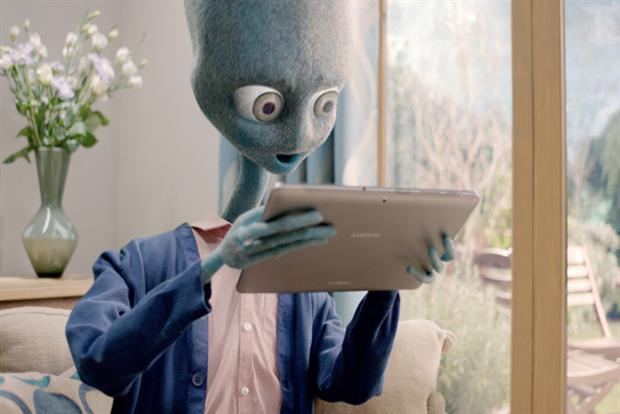 |
| Argos's Christmas alien: SO last year. Picture Marketing |
The new campaign is described by Marketing magazine: it is an up-tempo offering, based around a giant advent calendar containing gifts, BMX bikers, shiny reindeer, dancers, and other performers. The dancing child at the top of the set is said to represent the fairy on the top of a Christmas tree - a mixed metaphor, perhaps, but never mind.
Overlaying the images is an atypical soundtrack: less brass band and more inner city hip-hop. The music is by Run DMC, is called Christmas in Hollis, and is available for download from iTunes or the Android store. Argos knows it is talking to the smart phone generation and Run DMC is the real thing, a band hailing from Queens, New York. The ad "Will deliver energy and excitement into millions of living rooms to provide a modern twist to Christmas", according to their head of brand marketing.
This 21st century approach may be part of a wider campaign to modernise its image: the old catalogue in store is to be replaced by tablets and is targeting Amazon with a same-day delivery policy. Backing this up they have launched a Santa List app allowing children to make a digital wish list via their smartphone or tablet.
This foregrounding of the music matches what is being done by John Lewis and by Asda, both of whom feature new recordings which are available separately for sale. But while these two make a point of having the proceeds donated to charities, Argos's is a profit-based transaction. Christmas in the Hollis is an established number for the band and has been available without Argos's help since 2009.
The ad was premiered on TV on November 6, in a commercial break during Coronation Street. 25 years ago that would have given them an audience of 30 million; these days it is a more modest 7.5 million. The ad was also posted to YouTube where it has gained 200,000 viewings in 5 days. John Lewis's equivalent managed the same in its first couple of hours.
The 21st century impetus of the new advertising and app doesn't seem to have translated to social media. Although Argos have 100,000 followers on Twitter the nearest they get to a hashtag is #christmas and #christmasad. Hardly meme-generating. Similarly their Facebook page links to the advert on YouTube and promotes the app, but doesn't try and develop an engaging narrative.
Curiously, Argos released a YouTube video simultaneously called Get Set for Emma Bunton, promoting the former Spice Girl's range of clothing and footwear. This doesn't seem to have been promoted and at the time of writing was getting just 100 hits a day.
Overall the Advent campaign is surprising and refreshingly different. But Argos seems to missing opportunities to engage with its fans, rather than merely selling them stuff. While Argos and John Lewis have their artists and favoured charities promoting the social media campaign, there is nothing from Run DMC on Twitter.
Hip hip may be the face of the new Argos, but they need to try harder.
What Happened to The Frog Chorus? #foundit
 Retailer Debenhams 'premiered' it 2014 Christmas advertisement on 8 November, during the X Factor. This guaranteed the ad 7-8 million viewers, although it had already been released on YouTube a week earlier. At the time of writing the advert, called Found It, had been viewed nearly 350,000 times. By comparison with John Lewis and Marks & Spencer, this is a very muted response.
While some of the business press bubbled with enthusiasm about this "compelling customer proposition", others pointed out that the company's spend on making the TV ad has been slashed by two thirds. As we noted in other postings, retailers this year aim to make more of their budgets by using a multi-channel approach: in Debenhams case there will be a lot of point-of-sale material in store, as well as the social media side. They also promise 200 in store hot spots.
*
The theme of the ad is gift giving - or to be more correct, finding the right gift. Like John Lewis the focus is largely on small children and cuddly toys. Debenhams, though, have not attempted to produce branded merchandise in the way that John Lewis has successfully done with Monty the Penguin.
Debenhams is anxious to make its investment work harder, "A broad campaign which can play out across all media - paid and owned" (according to Marketing Week).
The choice of music is not explained: the ad uses a brass band recording of Paul McCartney's 1984 single Frog Chorus. There are no voices until the final shots where we hear "We all stand together" being sung. This choice has given the audiences the opportunity to ridicule the advertisement: online critics mock the fact that a song about frogs is the backing track to a film featuring reindeer and cuddly bears. The Guardian ironically wondered if the plan was for Frog Chorus to be the Christmas number one: while Asda and John Lewis have released their soundtracks to iTunes and other digital music platforms, this doesn't seem to have happened at Debenhams.
Twitter is an important part of the campaign to create a hardworking meme: @debenhams has
incentivised the use of their hashtag by offering prizes, but to date the takeup seems to have been slow. The store is trying to leverage co-creation by encouraging shoppers to take selfies with their purchases, which can go onto Twitter or their own microsite. Debenhams have been posting thumbnails of these online, although curiously the bulk of the pictures seem to have been posed, rather being true selfies. The Debenhams Facebook page is also working hard for them, with over 300,000 fans.
All in all an imaginative broad campaign from Debenhams, but not something that looks likely to match what is being achieved by rivals John Lewis or M&S.
Monday, 10 November 2014
Every Little Helps: #MakeChristmas
In the run up to Christmas 2013, supermarket Tesco laid out £25 million for TV advertising, outspending all other UK retailers. Tesco's sales actually fell by 2.4% over the period and the company was forced to issue a profit warning.
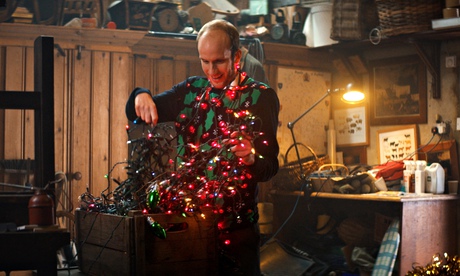 |
| Still from the Tesco TV ad. Source The Guardian |
At the time of writing, John Lewis's Monty advertisement had been viewed 10.5 million times on YouTube. M&S, which had debuted a day later was on on 2.5 million. #MontyThePenguin has remained 'trending' on Twitter since the launch on 6 November. Both campaigns have a strong narrative element; like all the best marketing, they tell an engaging story. They are strong visually and have powerful soundtracks - videos designed to engage with audiences, 'memes' to spread via FaceBook and other social media.
Last night (Sunday 9 November) it was Tesco's turn to launch its campaign. They booked a slot during the finale of Downton Abbey, something calculated to get them in front of 8-9 million people. As the press has been quick to point out, if any retailer needs a profit boost right now it is Tesco. The advertisement is called Lights On, and at the time of writing has had 200,000 viewings on YouTube - a good performance in 12 hours, most of which were night time.
The Tesco hashtag on Twitter, #MakeChristmas has seen very little adoption, most of it being around the time of Downton Abbey. Tesco's creative people use language which suggests ideas very similar to those put out by M&S last week: "doing all sorts of unexpected things to help people have a brilliant Christmas". It is difficult to know what they have in mind: @tesco stopped tweeting some time after Downton Abbey finished, picking up again at 8:30 this morning when almost all the twitter traffic was mundane queries and complaints.
The #MakeChristmas hashtag seems to be doing little to help. Once again, almost nothing overnight and the few uses it was getting seem to be ironic or mildly critical. Take this from @BoringOleFart: "It would be great if your stores could just donate that wee bit more to local foodbanks". Is the video "Behind the scenes of the Tesco Christmas campaign" going to go viral? We doubt it. 244 views in a day is not encouraging. A useful little lesson for marketing students, though.
Friday, 7 November 2014
Monty the Penguin and Newton's Third Law
Isaac Newton's Third Law of Motion (1687), crudely paraphrased, says that for every action there is an equal and opposite reaction. In the virtual world of social media we can often see the same thing playing out. We described this in an earlier post about Russell Brand and #parklife: the publicity surrounding Brand's new book Revolution sparked a popular counter reaction.
 |
| Picture: The Independent |
The supporting website at John Lewis develops the narrative, encouraging audiences to buy the music via iTunes. There is a range of interactive games to engage with, plus the all-important Monty merchandise, 42 items including clothing, toys and soft furnishings.
The mainstream media obligingly covered the campaign's launch in glowing terms. One dissenting voice was bt.com which talked of "outrage" at the £95 price tag for the cuddly toy version of Monty. This did nothing to stop the item selling out in the first day, making it already this year's must-have Christmas toy. Anticipating this, eBay listings started to fill with "official" Monty merchandise as well as knock-offs.
So, where does Newton's Third Law come in?
Amazingly, within just a few hours of the launch of the official Monty advert, a parody appeared. Redshirt Films, an independent production company in York, launched their take, titled #penguinmadness. Meme and countermeme. Those of us who had failed to share in the euphoria of the original John Lewis launch could now join in the counter-attack.
 |
| From https://twitter.com/ConnieMTC |
Other reactions are starting to appear. Take this example for Twitter's Connie Chamerlayne
(@ConnieMTC), for example.
The 'reaction' has started. However it is not yet equal and opposite.
Subscribe to:
Posts (Atom)