Showing posts with label Christmas. Show all posts

Monday, 24 November 2014

The Upstarts: Lidl, Aldi and #LittleSurprises


For supermarkets the Christmas season represents a chance to boost sales and profits at a time when normal rules are suspended.  According to market researchers Kantar, all of the top 5 UK supermarkets (with the exception of Asda) are losing market share.  While gains have been made by Waitrose and small multiple stores, the biggest gainers are Lidl (up 18% in the latest quarter) and Aldi (27% higher in the same period).

Jools Holland in the 2014 Aldi advertisement
Picture from MarketingMagazine
Both these stores are well established challengers to Tesco, Asda, Sainsbury's and Morrisons.  Each of these have now rolled out impressive-sounding TV advertising campaigns for 2014.  It is important to remember, though, that the biggest spender in 2013 was Tesco, who actually lost sales during the festive period.

Lidl's campaign for the end of 2014 is part of a much larger one, based around the theme of 'Lidl surprises'.  The overall campaign (not just the Christmas part) is costing the company  £20 million (according to The Grocer) - this looks impressive except when set against Tesco's spend last year of £25 million.  Lidl, like other supermarkets this year, intend to get more value out of their advertising by linking it to social media and other channels.

The 'surprises' theme in the Lidl advertisement comes over in the reaction of the 'ordinary people' from Hertfordshire who are seen tucking into a Christmas meal prepared from Lidl groceries.  There is surprise at being served lobster at the start, and stollen for dessert. Most of all, the diners are surprised to discover the provenance of the food: they had believed that it was from Waitrose or Marks & Spencer (both named in the film).  This should come as no surprise as Lidl had named these as targets in the pre-publicity.

On social media Lidl has been promoting the campaign, and has succeeded in getting the advertisement seen nearly 300,000 times to date.  Of course this is a small figure alongside the 12 million views that Sainsbury's has achieved.  Lidl is far less active on Twitter than all its competitors with a mere 16,500 followers.  Here there seems to be a great deal of confusion, with the official Twitter feed using numerous hashtags including #LidlChristmas, #Lidler and #LidlSurprises.  The social media channels are very effective at getting over the 'surprising' new Christmas goodies in store.

Lidl has 750,000 Facebook fans, where is uses the same range of hashtags.  The campaign launch was somewhat overshadowed by Lidl introducing what was popularly believed to be a "ban" on the use of any language but English by staff in Lidl stores.  


Aldi, unlike most retailers in 2014, has opted to feature a celebrity: Jules Holland and his band appear at the end of commercial.  The theme of the advertisement, "everyone's coming to us" is a witty poke at the way Aldi is growing at the expense of established competitors.  The TV advertisement itself, launched on Novemer 5, is nowhere near as popular as Lidl's, gaining just 50,000 views to date, despite the celebrity endorsement.  However the company outscores its German rival on Facebook with over 800,000 fans.  It also has a far larger Twitter following.  Both high scores are probably attributable to the company's successful ways at 'incentivizing' its fans with competitions and offers.  There is just one mention of the TV campaign, though.


The success of Aldi and Lidl should not be overstated: much of it is attributable to locational effects - both firms are opening new stores steadily across the UK.  Their campaigns in broadcast media and online stress product quality over low prices.  But the market share figures speak for themselves: everyone is going to them.


Waitrose: in the Shadow of the Penguin


Heston Blumenthal: dropped from
the Christmas advertising in 2014
Waitrose is another retailer that decided not to use celebrities in its TV advertising in 2014.  At least this is how the supermarket announced the new campaign.  It is slightly misleading as celebrity chef Heston Blumental continues to work for Waitrose, but his focus is far more on cooking, with the results being posted to the firm's YouTube pages.

Waitrose is part of the John Lewis group of companies: the department store arm of the business has been making headlines with the runaway success of its 2014 campaign, featuring Monty the Penguin.  But Waitrose started its campaigning early, with the launch on October 15 of  'Donate Your Voice', where ordinary members of the public were encouraged to record their voices singing a Dolly Parton song, with the final result being a compilation of voices in a single released for charity.  This was an ambitious attempt to achieve three things: to build brand value, to gain points for Corporate and Social Responsbility (CSR) and to encourage digital engagement.

The results of Donate Your Voice were released as a short video on YouTube on 10 November.  This was shortly after the launch of a separate, dedicate TV advertisement from Waitrose, called The Gingerbread Stall.   The latter was broadcast, but has also clocked up over half a million viewings on Youtube to date.  The Voice piece, by contrast, has had 125,000 viewings.

It seems a pity that Donate Your Voice seems to have been overshadowed by both Monty the Penguin and by the Gingerbread advertisement.  The single, which had been talked up as a possible Christmas Number One has not got into the charts, while the John Lewis music (Tom Odell's Real Love) rose to number 7 in the middle of October before dropping back.  The proceeds from Real Love were earmarked for the World Wildlife Fund: three separate charities are due to benefit from the Donate Your Voice campaign.


The viewing figures comparison is misleading, as voices from the earlier campaign featured in mainstream TV commercial.  This encourages audiences to download the single.  Curiously, given the company's apparent mastery of social media, the Waitrose Facebook page does not appear to have promoted the advert at all - it linked to a 'behind-the-scenes' film about the ad, before continuing to talk about foods and recipes as normal.  Strange, as Waitrose has more than 200,000 fans on Facebook.  The lack of attention given to the advertisement was replicated on Twitter (Waitrose has 172,000 followers), where there was a token reference to the behind-the-scenes video and nothing else.  Since then more food, recipes and the celebrity chef.  No hashtag, no apparent effort to leverage the social media value of the Donate Your Voice campaign.  Business as usual.

John Lewis, by contrast, has gained maximum value from its TV commercial and built a mass of social media engagement around it.  Waitrose seem to have had some good ideas built around their core brand values of people and altruism, but hasn't followed through with them.  Their half million viewing on YouTube look impressive, excepdit when compared to the 17 million that Monty the Penguin has been able to achieve.


Friday, 14 November 2014

Is this war? Morrisons and #MakeChristmasSpecial


Ant & Dec in the new advertisement.  Picture Daily Star
The last major UK retailer to reveal their Christmas advertising campaign is Morrisons.  This is launching tonight (14 November) during the commercial break in Coronation Street, which should expose the ad to around 7 million viewers.
 
Morrisons' 350,000 Facebook fans were given a preview last night, while the ad was launched on YouTube earlier today.  It was a slow start: at the time of writing the ad was getting about 50 hits an hour on the official page: in the same period last night, Sainsbury's were achieving 150,000 an hour.  Sainsbury's have a theme of war, and the press have been making it clear that competition on the high street is so severe that war is exactly what is being declared on TV and online.

According to the popular press Morrisons are targeting Lidl and Aldi, and using the ad to stress the freshness of their food.  Evidently 2013 found Morrisons shoppers to be "promiscuous", splitting their shopping between the major supermarket and their cheaper German rivals. With like-for-like sales down 7.4% in the first 6 months of 2014, this turned out to be "disastrous" for Morrisions and the new campaign aims to win the wayward shoppers back into a monogamous relationship.

Marketing is the key to Morrisons' turnaround strategy, according to their brand and communications director; the plan is to "ramp up [the] Christmas marketing budget".  Last year Tesco did the same and actually saw a drop in sales of 2.4%.  Morrisons plans to be more clever with their spend: like others it has plans to leverage social media traffic.  This involves music, with the supermarket sponsoring Capital FM's Jingle Bell Ball, and a deal with boy band Union J.  Both of these initiatives are designed to give audiences content to share on social media. Union J have more than 1.5 million Twitter followers, mostly thought to be children or young teens.  The Jingle Bell Ball will associate Morrisons with major acts including Taylor Swift, Take That, OneRepublic and Ed Sheeran.

Morrisions are also behind the launch of a special recording of their Christmas song "It's beginning to look a lot like Chrismas" by Union J, which will be performed at special ''song booths' in some stores where customers will be able to record their own voices over the song and share these via social media.  Sounds like a terrible idea to us, but hey, there's a war on.


Some more point-of-sale promotion (rather than the virtual kind) will come via giant Christmas pudding shaped vans visiting 32 different stores, offering free food and money off vouchers.  This is similar to what online-only retailer Littlewoods is doing with pantomime themed promotions in city centres.

Morrisons are continuing to invest in celebrity endorsement, with the 2014 fronted by Ant and Dec as in previous years.  As we have noted in other posts, celebrities can be very useful in social media if they work for their money, as they generally have much larger fan bases than the retailers.  Morrisons have been attempting to kickstart the campaign via Twitter with the #MakeChristmasSpecial hashtag - a clumsy choice (too long and tricky to spell) which so far has gained no traction online.

In summary, a piece of advertising which will fail to engage with the chattering classes, but which clearly targets a particular audience - "Mums and kids".  Morrisons have thought through the issues and have something in place that may just people sharing its values.  The problem is that, at the time of writing at least, not even the mums and kids have bought into the campaign.


Wednesday, 12 November 2014

Littlewoods: #CelebrityWishes


Image from Event Magazine
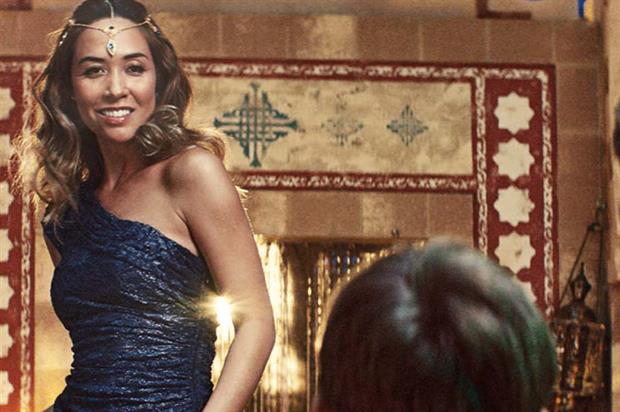
Celebrities feature in the 2014 TV commercial from Littlewoods.  The ad's theme is one of pantomime, as the characters appear to be acting out Aladdin on stage, complete with celebrities Myleene Klass and Christopher Biggins.

This creative execution is likely to be less controversial than their 2011 offering which received more than 450 complaints.  The ASA, the UK's advertising regulator, refused to investigate, and a lively debate started online about the merits of the campaign.  Most of the comments were negative to Littlewoods. Audience engagement, yes; a social media meme, perhaps not.

Many people watching the ads will be unaware that Littlewoods no longer has a presence on the High Street having started closing stores in 2004-5 and moved to online trading.  It is now in a highly competitive sector, up against slick online-only operations like Amazon as well as the online trading sites of other retailers.

The 2014 advertising, both on broadcast TV and online, links closely to the firm's shopping portals.  The ad itself is full of products and gift ideas.  Klass has a role as a fairy magically transforming gifts (something happening in this year's advertising from M&S which features two fairies). Klass's role in transforming wishes is part of the message to be developed on social media, themed around #LittlewoodsWishes (see below).  Biggins is there for comic relief.

>

The TV campaign started on November 7, during the commerial break for Coronation Street, something which should have given Littlewoods around 7.5 million viewers.  At the time of writing the Youtube video had a respectable 350,000 viewings. A punchy soundtrack is delivered by Sam and the Womp's Bom Bom.  Littlewoods don't appear to have any plans to commercialize this in the way that Asda and John Lewis have done, where specially recorded tracks have been made available for download on iTunes and other platforms.  Myleene Klass is a talented classical musician in her own right, but her appearance here has more to do with her role as a 'brand ambassador' and fashion designer for the store.

The pantomime theme is not a random creative choice.  It highlights Littlewoods's deal with the Ambassador Theatre Group where Littlewoods are sponsoring pantomimes in 10 UK locations.  Tied into this is an ambitious 'Christmas Wishes Tour' which will travel to the cities involved (including Birmingham, Liverpool and Glasgow) with a themed combination of entertainment and retailing designed to put Littlewoods back into city centres.   The designers claim that  "This is a great example of experiential and digital out-of-home working hand-in-hand to drive customer engagement with the Littlewoods brand. The immersive nature of the activity, along with on-site technology and prizes, brings the brand to life and into consumer’s hands."

The tour will give Littlewoods the chance to develop a social media campaign around the hashtags #ChristmasWishes and #LittlewoodsWishes.  M&S is doing something similar with its #FollowTheFairies campaign.  Both campaigns are interesting examples of where retail brands are combining broadcast messages with online narratives linking into real-time, face-to-face engagement. Littlewoods is going further than most by using NFC technologies at their events to entice customers into their online stores via their smartphones.  We would expect to see Littlewoods using Klass and Biggins at these events.

Littlewoods have made brief reference to the new campaign on their Facebook pages, where they have approaching 200,000 fans.  Similarly, there has been a half-hearted promotion of #ChristmasWishes and #LittlewoodsWishes on Twitter where they have a more modest 39,000 followers. Myleene Klass is far more active in this medium, and tweets almost constantly to her 450,000 followers, including linking to her work for Littlewoods.  Christopher Biggins is quiet by comparison although this might change as #LittlewoodsWishes is ramped up.

Overall this is turning out to be an imaginative campaign with the various elements carefully thought through.  The mix of online and real-world, shopping and entertainment, should work well.  Currently, though, the focus is very much on engagement equaling transactions, and the social media elements have yet to get going.


Tuesday, 11 November 2014

Argos: Hip Hopping to #christmas


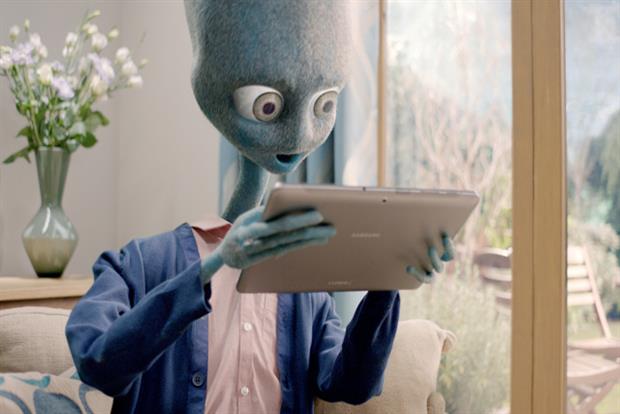
Argos's Christmas alien: SO last year.  Picture Marketing
Argos has produced something very different from the rest of the High Street this Christmas.  Get Set for Advent also marks a departure for Argos, which has traditionally based their Christmas ads around a family of aliens.

The new campaign is described by Marketing magazine: it is an up-tempo offering, based around a giant advent calendar containing gifts, BMX bikers, shiny reindeer, dancers, and other performers.  The dancing child at the top of the set is said to represent the fairy on the top of a Christmas tree - a mixed metaphor, perhaps, but never mind.

Overlaying the images is an atypical soundtrack: less brass band and more inner city hip-hop.  The music is by Run DMC, is called Christmas in Hollis, and is available for download from iTunes or the Android store.  Argos knows it is talking to the smart phone generation and Run DMC is the real thing, a band hailing from Queens, New York.  The ad "Will deliver energy and excitement into millions of living rooms to provide a modern twist to Christmas", according to their head of brand marketing.

This 21st century approach may be part of a wider campaign to modernise its image: the old catalogue in store is to be replaced by tablets and is targeting Amazon with a same-day delivery policy. Backing this up they have launched a Santa List app allowing children to make a digital wish list via their smartphone or tablet.

This foregrounding of the music matches what is being done by John Lewis and by Asda, both of whom feature new recordings which are available separately for sale.  But while these two make a point of having the proceeds donated to charities, Argos's is a profit-based transaction.  Christmas in the Hollis is an established number for the band and has been available without Argos's help since 2009.


The ad was premiered on TV on November 6, in a commercial break during Coronation Street.  25 years ago that would have given them an audience of 30 million; these days it is a more modest 7.5 million.  The ad was also posted to YouTube where it has gained 200,000 viewings in 5 days.  John Lewis's equivalent managed the same in its first couple of hours.

The 21st century impetus of the new advertising and app doesn't seem to have translated to social media.  Although Argos have 100,000 followers on Twitter the nearest they get to a hashtag is #christmas and #christmasad.  Hardly meme-generating.  Similarly their Facebook page links to the advert on YouTube and promotes the app, but doesn't try and develop an engaging narrative.

Curiously, Argos released a YouTube video simultaneously called Get Set for Emma Bunton, promoting the former Spice Girl's range of clothing and footwear.  This doesn't seem to have been promoted and at the time of writing was getting just 100 hits a day.

Overall the Advent campaign is surprising and refreshingly different.  But Argos seems to missing opportunities to engage with its fans, rather than merely selling them stuff.  While Argos and John Lewis have their artists and favoured charities promoting the social media campaign, there is nothing from Run DMC on Twitter.

Hip hip may be the face of the new Argos, but they need to try harder.

Boots: #SpecialBecause


Picture: the Daily Mail
The Christmas shopping season is as important to UK pharmacy Boots as to any other retailer on the high street.  What is unusual about their 2014 marketing campaign is that while most others bolt social media onto the TV advertising, Boots seems to have come up with the idea of a meme around giving first, and then designed other elements around it.

Boots are promoting #SpecialBecause, the pleasure of giving rather than the joy of receiving that features in many competing offerings.  Exceptions include Marks & Spencer whose social media campaign #FollowTheFairies is fed by a team travelling the UK performing random acts of kindness.  Boots is running something similar, "celebrating the little things that make big differences".

The advertisement tells the story of a family that makes the effort to make a mother feel special when she has had to work over Christmas day.  It features music by Alexi Murdoch, his Song for You subtly chiming with the whole theme of giving.  But while John Lewis and Asda have recorded special versions of their soundtracks and released them as singles, Boots uses Murdoch's recording unaltered.  In fact there is only a passing reference to it on YouTube.


On Twitter Boots encourages customers to engage with #SpecialBecause, but the idea seems to be taking time to catch on.  The advertisement was first screened on 7 November, like Tesco's new Christmas ad being premiered during the finale of Downton Abbey.  7-8 million viewers guaranteed.  YouTube has been less generous, delivering just 170,000 views in the 3 days since.  The official Boots Facebook page, with over 750,000 fans, have also been fairly coy about the campaign.

The decision to downplay the soundtrack seems like a missed opportunity.  John Lewis gained additional publicity when its Christmas number Real Love charted at number 21 in its first week.  Both they and Asda have had the charities which benefit from the royalties promoting the campaigns and helping generate the memes.  Boots's rivals are being seen to be supporting worthy causes: surely these are #SpecialBecause?


Monday, 10 November 2014

Every Little Helps: #MakeChristmas


In the run up to Christmas 2013, supermarket Tesco laid out £25 million for TV advertising, outspending all other UK retailers.  Tesco's sales actually fell by 2.4% over the period and the company was forced to issue a profit warning.


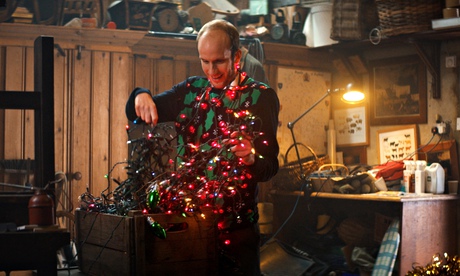
Still from the Tesco TV ad.  Source The Guardian
Fast-forward a year and retail sector are spending another £700 million on TV advertising.  Over the past few days we have written about the John Lewis campaign featuring Monty the Penguin, and Marks & Spencer's #FollowTheFairies.  The media research firm Nielsens suggests that overall TV spending will be down slightly this year, while most other experts believe that a larger proportion of marketing budgets will be spent linking these campaigns to social media.

At the time of writing, John Lewis's Monty advertisement had been viewed 10.5 million times on YouTube.  M&S, which had debuted a day later was on on 2.5 million.  #MontyThePenguin has remained 'trending' on Twitter since the launch on 6 November.  Both campaigns have a strong narrative element; like all the best marketing, they tell an engaging story.  They are strong visually and have powerful soundtracks - videos designed to engage with audiences, 'memes' to spread via FaceBook and other social media.

Last night (Sunday 9 November) it was Tesco's turn to launch its campaign.  They booked a slot during the finale of Downton Abbey, something calculated to get them in front of 8-9 million people.  As the press has been quick to point out, if any retailer needs a profit boost right now it is Tesco. The advertisement is called Lights On, and at the time of writing has had 200,000 viewings on YouTube - a good performance in 12 hours, most of which were night time.


The Tesco hashtag on Twitter, #MakeChristmas has seen very little adoption, most of it being around the time of Downton Abbey.  Tesco's creative people use language which suggests ideas very similar to those put out by M&S last week: "doing all sorts of unexpected things to help people have a brilliant Christmas".  It is difficult to know what they have in mind: @tesco stopped tweeting some time after Downton Abbey finished, picking up again at 8:30 this morning when almost all the twitter traffic was mundane queries and complaints.

The #MakeChristmas hashtag seems to be doing little to help.  Once again, almost nothing overnight and the few uses it was getting seem to be ironic or mildly critical.   Take this from @BoringOleFart: "It would be great if your stores could just donate that wee bit more to local foodbanks". Is the video "Behind the scenes of the Tesco Christmas campaign" going to go viral? We doubt it. 244 views in a day is not encouraging. A useful little lesson for marketing students, though.


Friday, 7 November 2014

Creating the meme: #thetwofairies


Here's a heartwarming seasonal story.  Someone sets up an anonymous Twitter account called The Two Fairies and uses it to shine little rays of sunshine into the lives of random strangers.
 Anonymous? Altruistic?  We doubt it.  This initiative is costing someone serious amounts of money.  That someone is reputed to be Marks & Spencer.  The agency behind the campaign is the highly successful London PR firm Unity.

It has the appearance of something spontaneous, but is actually being carefully orchestrated.  In today's cluttered media space, for a brand to stand out it has to do something extraordinary.  We believe that the marketing people behind @TheTwoFairies are rolling out a teaser campaign, prompting audiences to ask who is behind these amazing stunts.  Curiosity stimulated, there is a moral imperative to share the story, and in doing so it goes viral.  Result: everyone feels good about M&S in the run up to the largest retail festival of the year.

Regardless of whether or not M&S is behind this campaign, they need to do something.  Last year their high profile campaign "Believe in magic and sparkle" trailed John Lewis in the social media charts.  This year, as we have noted in an earlier post, John Lewis had had a blistering start to the season with 4 million views in the first 24 hours of their Monty the Penguin campaign.

At the time of writing @TheTwoFairies is losing the social media battle.  #montythepenguin is trending on Twitter, although it has been pipped to the post by Toy Story 4.  #Followthefairies has a presence, but only as a 'promoted' hashtag - in other words someone is now paying to try and get it noticed.

@TheTwoFairies was set up as a Twitter account on October 30.  Since then it has been delighting random people across the UK with gifts of flowers, food and other merchandise, as well as covering a Cornish primary school with snow.  The Daily Mirror and the regional press have been following the story.  It has also done well across social media.

But not well enough, if the organisers are having to pay for exposure with a sponsored hashtag?  These things are supposed to go viral.  Why aren't people bothered about who is behind these acts of seasonal kindness?  Once again the Mirror obligingly asks the questions for us, and concludes that Marks & Spencer is behind the campaign.


Behold!  So it turns out to be.  Earlier today (7 November) M&S called a press conference to admit to what they had denied to The Mirror.  The new campaign, Fly Me to the Moon, has a classic soundtrack from Julie London.

As the press coverage notes, today's announcement is all about trying to neutralize the #montythepenguin effect.   Are The Two Fairies a new meme?  Watch this space.