Showing posts with label Tesco. Show all posts

Monday, 24 November 2014

The Upstarts: Lidl, Aldi and #LittleSurprises


For supermarkets the Christmas season represents a chance to boost sales and profits at a time when normal rules are suspended.  According to market researchers Kantar, all of the top 5 UK supermarkets (with the exception of Asda) are losing market share.  While gains have been made by Waitrose and small multiple stores, the biggest gainers are Lidl (up 18% in the latest quarter) and Aldi (27% higher in the same period).
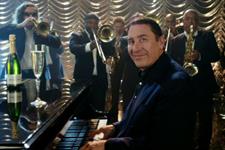
Jools Holland in the 2014 Aldi advertisement
Picture from MarketingMagazine
Both these stores are well established challengers to Tesco, Asda, Sainsbury's and Morrisons.  Each of these have now rolled out impressive-sounding TV advertising campaigns for 2014.  It is important to remember, though, that the biggest spender in 2013 was Tesco, who actually lost sales during the festive period.

Lidl's campaign for the end of 2014 is part of a much larger one, based around the theme of 'Lidl surprises'.  The overall campaign (not just the Christmas part) is costing the company  £20 million (according to The Grocer) - this looks impressive except when set against Tesco's spend last year of £25 million.  Lidl, like other supermarkets this year, intend to get more value out of their advertising by linking it to social media and other channels.

The 'surprises' theme in the Lidl advertisement comes over in the reaction of the 'ordinary people' from Hertfordshire who are seen tucking into a Christmas meal prepared from Lidl groceries.  There is surprise at being served lobster at the start, and stollen for dessert. Most of all, the diners are surprised to discover the provenance of the food: they had believed that it was from Waitrose or Marks & Spencer (both named in the film).  This should come as no surprise as Lidl had named these as targets in the pre-publicity.

On social media Lidl has been promoting the campaign, and has succeeded in getting the advertisement seen nearly 300,000 times to date.  Of course this is a small figure alongside the 12 million views that Sainsbury's has achieved.  Lidl is far less active on Twitter than all its competitors with a mere 16,500 followers.  Here there seems to be a great deal of confusion, with the official Twitter feed using numerous hashtags including #LidlChristmas, #Lidler and #LidlSurprises.  The social media channels are very effective at getting over the 'surprising' new Christmas goodies in store.

Lidl has 750,000 Facebook fans, where is uses the same range of hashtags.  The campaign launch was somewhat overshadowed by Lidl introducing what was popularly believed to be a "ban" on the use of any language but English by staff in Lidl stores.  


Aldi, unlike most retailers in 2014, has opted to feature a celebrity: Jules Holland and his band appear at the end of commercial.  The theme of the advertisement, "everyone's coming to us" is a witty poke at the way Aldi is growing at the expense of established competitors.  The TV advertisement itself, launched on Novemer 5, is nowhere near as popular as Lidl's, gaining just 50,000 views to date, despite the celebrity endorsement.  However the company outscores its German rival on Facebook with over 800,000 fans.  It also has a far larger Twitter following.  Both high scores are probably attributable to the company's successful ways at 'incentivizing' its fans with competitions and offers.  There is just one mention of the TV campaign, though.


The success of Aldi and Lidl should not be overstated: much of it is attributable to locational effects - both firms are opening new stores steadily across the UK.  Their campaigns in broadcast media and online stress product quality over low prices.  But the market share figures speak for themselves: everyone is going to them.


Thursday, 13 November 2014

Sainsbury's declaration of war: #ChristmasIsForSharing


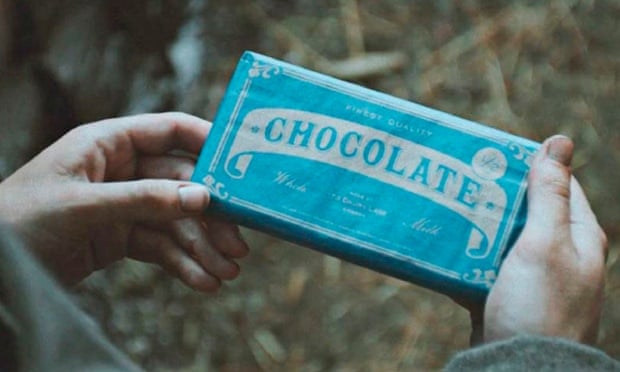
Commemorative WW1 chocolate: picture from The Guardian
What can we say about Sainsbury's 2014 Christmas TV commercial?
  1. It has almost no product placement (like John Lewis);
  2. At nearly 4 minutes, it is much longer than John Lewis);
  3. It tugs at the emotional heartstrings (like John Lewis);
  4. It "might not drive footfall directly, but it will build brand love and strengthen the consumer connection" (Marketing magazine), (just like John Lewis).
Or, as The Independent's headline put it, "Sainsbury's Christmas advert is like a 4-minute 'f*** you' to John Lewis and Monty the penguin".  At the time of writing the video on YouTube is being watched around 150,000 times every hour. In the 24 hours since the ad was screened 100,000 people have 'liked it' on Facebook.  There are 200 comments being posted about it on Twitter every hour.

The 2014 Sainsbury's Christmas advertisement replays the episode, almost 100 years ago, when enemies on the front line in World War I suspended hostilities on Christmas Day and joined in spontaneous acts of friendship with 'the enemy'.  It taps into growing public interest in the anniversary of the start of the war, and builds on a long-term 'Corporate Social Responsibility' (CSR) link that the company has with the Royal British Legion.


So is this all about John Lewis?  According to the press, yes.  Sainsbury's learned from John Lewis in 2013 that when you build brand, trust and emotional engagement, this translates into sales.  Sainsbury's shares the same sort of customer demographic as John Lewis, but has been losing market share throughout 2014.  The biggest spender on advertising in 2013 was Tesco, but their sales dropped over the crucial Christmas period.  Sainsbury's will engage with its audience: that's the plan, at least.

The small piece of product placement in the advertisement is a bar of chocolate.  It is available in stores for a modest £1.  The chocolate is made in Ypres, Belgium, the centre of some of the most bloody fighting in WW1.  All profits are being donated to the Royal British Legion which has historically looked after the interests of ex-servicemen.  The gesture looks generous alongside John Lewis's merchandising of Monty the Penguin.  Their £95 replica of Monty sold out in hours, but there was no associated charitable giving.

No doubt this stunning piece of film is going to win Sainsbury's and their creative team some advertising awards.  It is likely to win the hearts and minds of many who watch the advertisement.  The choice of war is a risky one: who wants to be reminded of its horrors?  But, as the press reminds us, supermarkets are engaged in their own battles and this campaign is one that Sainsbury's hope will go their way.


Postscript: in the hour that it has taken to write this post, Sainsburys's advertisement has been viewed nearly 200,000 times on YouTube.


Monday, 10 November 2014

Every Little Helps: #MakeChristmas


In the run up to Christmas 2013, supermarket Tesco laid out £25 million for TV advertising, outspending all other UK retailers.  Tesco's sales actually fell by 2.4% over the period and the company was forced to issue a profit warning.


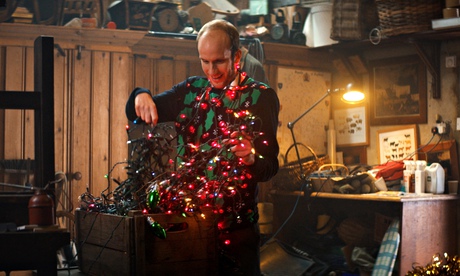
Still from the Tesco TV ad.  Source The Guardian
Fast-forward a year and retail sector are spending another £700 million on TV advertising.  Over the past few days we have written about the John Lewis campaign featuring Monty the Penguin, and Marks & Spencer's #FollowTheFairies.  The media research firm Nielsens suggests that overall TV spending will be down slightly this year, while most other experts believe that a larger proportion of marketing budgets will be spent linking these campaigns to social media.

At the time of writing, John Lewis's Monty advertisement had been viewed 10.5 million times on YouTube.  M&S, which had debuted a day later was on on 2.5 million.  #MontyThePenguin has remained 'trending' on Twitter since the launch on 6 November.  Both campaigns have a strong narrative element; like all the best marketing, they tell an engaging story.  They are strong visually and have powerful soundtracks - videos designed to engage with audiences, 'memes' to spread via FaceBook and other social media.

Last night (Sunday 9 November) it was Tesco's turn to launch its campaign.  They booked a slot during the finale of Downton Abbey, something calculated to get them in front of 8-9 million people.  As the press has been quick to point out, if any retailer needs a profit boost right now it is Tesco. The advertisement is called Lights On, and at the time of writing has had 200,000 viewings on YouTube - a good performance in 12 hours, most of which were night time.


The Tesco hashtag on Twitter, #MakeChristmas has seen very little adoption, most of it being around the time of Downton Abbey.  Tesco's creative people use language which suggests ideas very similar to those put out by M&S last week: "doing all sorts of unexpected things to help people have a brilliant Christmas".  It is difficult to know what they have in mind: @tesco stopped tweeting some time after Downton Abbey finished, picking up again at 8:30 this morning when almost all the twitter traffic was mundane queries and complaints.

The #MakeChristmas hashtag seems to be doing little to help.  Once again, almost nothing overnight and the few uses it was getting seem to be ironic or mildly critical.   Take this from @BoringOleFart: "It would be great if your stores could just donate that wee bit more to local foodbanks". Is the video "Behind the scenes of the Tesco Christmas campaign" going to go viral? We doubt it. 244 views in a day is not encouraging. A useful little lesson for marketing students, though.